Why this matters
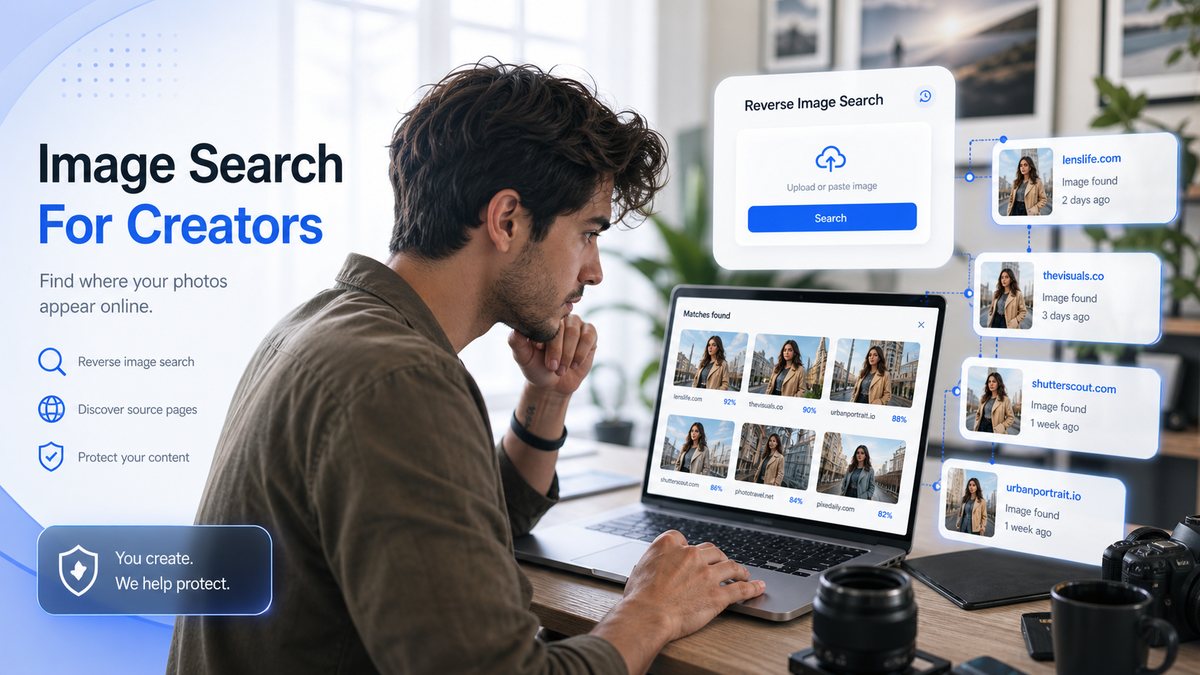
Image Search For Creators is for creators, photographers, models, and public-facing professionals. The goal is a review process for spotting photo reuse across the public web while staying honest about limits. FaceProwl is designed around public-web source discovery, consent-based uploads, and reviewable URLs. It can help you organize a search, but the final decision should come from checking the page, image, and context together.
When people search for image search for creators, they usually want a fast answer. A good search workflow should be fast, but it should also be careful. Public pages can change, indexes can miss new images, and similar faces or similar photos can create weak leads. The practical approach is to treat results as evidence to review, not as automatic proof.
Search published assets first
Start with the images that are already public: headshots, promo portraits, thumbnails, and press photos. These are the images most likely to be copied.
Separate credit issues from impersonation
A repost with credit is different from a fake account or commercial misuse. Group results by intent so your response fits the situation.
Create a light monitoring habit
Creators benefit from periodic checks. A monthly review can catch new copies before they spread across more sites.
Practical checklist
- Use photos you own or have permission to search.
- Choose clear images with enough face or subject detail.
- Review the source page before saving, sharing, or reporting a result.
- Keep the page URL, image URL, date, and screenshots when a result matters.
- Repeat important searches later because public web indexes change.
FaceProwl can help you search public-web source signals, preview possible matches, and unlock reviewable source URLs when a result is worth checking.
Start a FaceProwl searchFAQ
Can FaceProwl guarantee every matching page?
No. Public-web search depends on provider coverage, crawler permissions, page freshness, and whether images are accessible without login.
Should I treat a result as proof?
No. Treat a result as a lead. Review the page, image, domain, and context before taking action.